

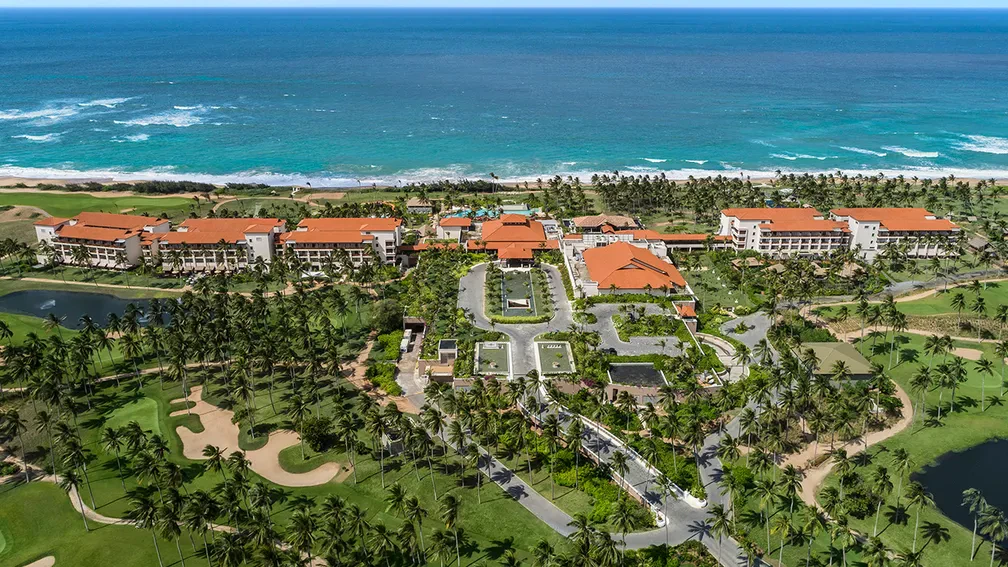
The Strategic Architecture of Luxury Hospitality: Shangri-La Hambantota Golf Resort & Spa
The global hospitality industry in the mid-2020s serves as a critical barometer for macroeconomic resilience, technological integration, and evolving consumer values. Within this landscape, Shangri-La Hambantota Golf Resort & Spa emerges not merely as a luxury lodging facility but as a strategic anchor for the southern Sri Lankan economy and a flagship for the Shangri-La Group’s wider South Asian expansion. This case study examines the resort through the lens of advanced marketing theory, infrastructural development, and the requirements of the international luxury traveler, tailored to the academic rigor of the Chartered Institute of Marketing (CIM) curriculum.Theme Accent — Luminous Coastal Sanctuary: Use warm sunrise gradients, brass metallic lines, and hand-drawn dune motifs to echo the resort’s coastal Asian hospitality narrative while maintaining academic clarity.
Corporate Genesis and the Philosophy of Asian Hospitality
The Shangri-La brand—named after a mythical land of peace and contentment—was established in 1971 by Malaysian-Chinese tycoon Robert Kuok. The inaugural Singapore property broke from colonial-era hospitality models that favored rigid ceremony and Western-centric service. Kuok’s objective was to create a sanctuary reflecting the rhythms of Asian hospitality: humility, respect, courtesy, and heartfelt sincerity. A “full-stack” developmental model—owning land, designing architecture, and training personnel in-house—secured control over service rituals and operational consistency. By the early 2020s, Shangri-La Group had evolved into a multi-asset lifestyle and real estate player with 100+ hotels and resorts across four brands: Shangri-La, Kerry Hotels, JEN, and Traders. Its 2021 rebranding, aligned with the 50th anniversary, introduced a refreshed logo and the Shangri-La Circle loyalty platform to unify dining, wellness, and stay experiences for a younger, tech-savvy demographic. This evolution was necessary as RevPAR in key Asian markets began to exceed pre-pandemic levels.Table 1. Shangri-La Group Brand Architecture and Positioning
The 2016 entry into Sri Lanka via Hambantota capitalized on the nation’s post-war tourism surge and proximity to major maritime routes. The 58-hectare coastal resort forms the leisure anchor for a dual-city strategy that also includes Shangri-La Colombo, enabling coverage of both urban business and coastal leisure segments.
Regional Context: The Historic Significance of Hambantota
Hambantota, founded circa 200 BC as Magampura, was once a flourishing center along the ancient Spice Route. This heritage allows the resort to position itself as a gateway to sites such as the Sithulpawwa Rock Temple and the sacred city of Kataragama. The region’s dramatic geography—salt flats, wildlife-rich national parks, and critical marine turtle nesting grounds—provides a rich storytelling palette for experiential marketing. Strategically, Hambantota benefits from the Hambantota International Port and the Mattala Rajapaksa International Airport, which together lay the groundwork for an integrated sea-to-air logistics corridor. While initially dismissed as “white elephants,” these assets are increasingly viewed as redundancy enablers for global supply chains seeking alternatives to the congested Western Province.Macro-Environmental Analysis: PESTEL 2024–2026
Shangri-La Hambantota operates within a volatile yet promising macro-context. Sri Lanka’s hospitality sector was valued at USD 4.2 billion in 2024 and is projected to reach USD 7.8 billion by 2032, a CAGR of 9.3%.Political and Economic Stability
Sri Lanka is transitioning from the economic crisis and unrest of 2022 toward stabilization and tourism-led recovery. The “Vision 2030” strategy emphasizes inclusive, sustainable growth to achieve upper-middle-income status.Operating margins are normalizing as inflation is forecast around 2.1% for 2025 and utility costs stabilize, though currency fluctuations and finance costs remain risks.\ A milder depreciation of the LKR toward 310–315 per USD increases USD-linked revenue but also raises the cost of imported luxury inputs and capital expenditures for the resort.Social Trends and Demographic Shifts
An USD 84 trillion intergenerational wealth transfer is shifting influence to Gen X, Millennials, and Gen Z, cohorts that prioritize conscience, culture, and connection over material comfort. Regenerative tourism—travel that restores rather than merely sustains—is driving demand for cultural immersion, artisanal workshops, and conservation projects. Shangri-La Hambantota’s Halal-Friendly Certification by Trace & Able (Private) Limited positions it to capture a share of the Muslim travel segment, projected at 230 million arrivals and USD 225+ billion in expenditure by 2028. This largely family-oriented segment finds the resort’s golf, wellness, and recreation mix attractive.Technological and Environmental Drivers
Technology has moved from back-of-house utility to front-of-house differentiator. AI-enabled personalization and predictive analytics now anticipate guest expectations in Sri Lankan luxury hotels. Smart rooms featuring IoT controls and mobile keys integrated with digital wallets are becoming baseline expectations for 2025 travelers. Environmentally, the industry faces pressure to implement sustainable practices; “sustainability as the new luxury” emphasizes ecological integrity and community empowerment. Sri Lanka’s Ayurvedic legacy and biodiversity are competitive advantages, though gaps persist in infrastructure and skilled wellness practitioners.Table 2. Projected Tourism Metrics for Sri Lanka (2024–2030)
Strategic Marketing Framework: Segmentation, Targeting, and Positioning (STP)
The resort applies the STP model to align offerings with distinct consumer needs instead of serving a monolithic market.Segmentation Variables
- Demographic: High-net-worth individuals and affluent multigenerational families.
- Geographic: Traditional markets (UK, Europe) plus “new wealth geographies” such as India, China, and Gulf nations.
- Psychographic: “Experiential seekers” prioritizing authenticity and “wellness enthusiasts” emphasizing Ayurvedic rituals.
- Behavioral: “Bleisure” travelers combining business and leisure plus high-value MICE participants seeking world-class conference and wedding facilities.
Table 3. Segment Profiles for Shangri-La Hambantota
Targeting and Positioning Strategy
Shangri-La Hambantota uses differentiated targeting, crafting specific marketing mixes per segment. For weddings, the resort spotlights its 1,400-capacity ballroom and ability to execute multi-day event programs, exemplified by the Shaikhani–Hafsha celebration spanning 21 curated events. Positioning centers on a “Sanctuary for the Senses,” blending authentic Asian hospitality with southern Sri Lanka’s rugged natural beauty to create symbolic and experiential value beyond functional accommodation.The Extended Marketing Mix: The 7Ps
Product (Services and Facilities)
Beyond luxury accommodation, augmented offerings include Sri Lanka’s first resort-based 18-hole golf course and the Artisan Village. The Artisan Village preserves culture through four traditional huts showcasing wood carving, pottery, weaving, and batik, aligning with travelers seeking immersive cultural engagement over “sun and sea.”Price and Yield Management
Shangri-La employs premium pricing underpinned by dynamic yield management to maximize RevPAR. Rates adjust based on demand, booking behavior, and local events. Sample 2026 rates include “Luxe Indulgence” packages from USD 880 (four nights) and “Suite Escape” packages from USD 740 (two nights).Length-of-stay restrictions during peak demand prevent short bookings from crowding out longer, higher-yield stays, while “Stay More, Pay Less” incentives and Shangri-La Circle exclusives encourage direct bookings.Table 4. Yield Management Levers in Luxury Hospitality
Promotion and Brand Visibility
Storytelling and digital engagement anchor the promotional mix. The global “Find Your Shangri-La” campaign leverages whimsical brand films to celebrate personalization and authenticity. #MyShangriLa user-generated content on Instagram and TikTok captures the “Insta-generation,” while influencer collaborations across tiers help reach urban youth and affluent travelers.Place and Distribution Strategy
The Southern Expressway extension reduced travel time from Bandaranaike International Airport to roughly 2.5 hours, turning Hambantota into a viable short-stay destination. Distribution relies on centralized online reservations, airline partnerships with bonus mileage, and curated third-party luxury travel agents.People, Process, and Physical Evidence
People remain the defining asset: the Shangri-La Academy offers 200+ curated courses to embed Asian hospitality principles in every staff member. Process innovations—mobile check-in, digital IDs, and frictionless workflows—reduce front-desk load and elevate personalization. Physical evidence spans the 58-hectare tropical landscape, manicured golf greens, and colonial-inspired architecture substantiating the luxury claim.Competitive Benchmarking: Anantara vs. Shangri-La
Table 5. Southern Sri Lanka Ultra-Luxury Comparison
Anantara emphasizes seclusion and villa-host services suited to couples, while Shangri-La deploys its scale and versatility to attract audiences ranging from solo golf travelers to large-scale international weddings.
Sustainability, CSR, and the “18R” Environmental Model
Sustainability is woven into the “Rooted in Nature” initiative that champions local, seasonal, and ethically sourced ingredients, reinforcing Sri Lanka’s natural abundance and supporting local livelihoods.Biodiversity and Wildlife Conservation
A flagship partnership with the Elephant Transit Home supports “El-la,” a rescued baby elephant—an embodiment of Shangri-La’s empathy and cultural stewardship. Proximity to Bundala and Yala National Parks necessitates responsible tourism practices that protect sensitive habitats.The 18R Waste Management Model
The resort’s holistic 18R framework extends far beyond recycling:- Rethink & Refuse – remove unnecessary single-use items at source.
- Reduce, Reuse, Repair – extend material lifecycles across operations.
- Refurbish, Remanufacture, Repurpose – upcycle furniture and equipment.
- Recycle, Recover, Restore – reintegrate materials or rehabilitate ecosystems.
- Reintegrate, Replant, Rewild – pursue reforestation and biodiversity restoration on the property.
- Recharge, Respect, Re-educate, Reward – build sustainability culture among employees and guests.
Technological Integration and the Future of Guest Experience
By 2025, AI and IoT integrations are must-haves: 80% of guests seek digital keys and 69% prefer smart rooms with app-based control over temperature and lighting.AI and Personalization
Shangri-La is evolving from scripted chatbots to generative AI concierges embedded in guest devices. These tools use historical data to predict preferences (e.g., room temperature, dietary requirements) before they are requested. Automated check-in/out correlates strongly with satisfaction (r = 0.72), underscoring the value of autonomy and speed.Data Security and Ethics
Dynamic pricing and biometric authentication demand transparency and secure data stewardship. Integrated PMS platforms must comply with standards such as GDPR to safeguard guest information. Smart hospitality augments rather than replaces human warmth, enabling associates to focus on heartfelt service.The “White Elephant” Narrative: Infrastructure and Logistics
The Hambantota International Port (HIP) and Mattala Rajapaksa International Airport (MRIA) remain controversial yet increasingly strategic as supply chains prioritize redundancy.Hambantota–Mattala Corridor
The port-airport proximity creates an integrated sea-to-air logistics corridor that bypasses Colombo congestion. For Shangri-La, this opens opportunities in marine-related services wherein vessel crews leverage the resort for accommodation and MICE events. However, development has ecological costs: Mattala Airport construction displaced roughly 100,000 hectares of forest from 2000 to 2014, intensifying human-elephant conflict as 250 elephants lost habitat. A dedicated 18-guard wildlife unit now protects the runway, highlighting the need to balance infrastructure gains with conservation.Strategic Conclusions and Recommendations
Shangri-La Hambantota stands at a pivotal point as Sri Lankan tourism moves from post-crisis recovery to high-value sustainable growth heading toward 2030.Key Strategic Insights
- Cultural resilience as a brand moat: Authentic Asian hospitality and the Artisan Village’s craft preservation offer differentiation Western chains struggle to replicate.
- Infrastructure as catalyst: Projects such as MRIA pose ecological risks but unlock long-term logistics advantages for marine crews and private aviation guests.
- Sustainability imperative: With 40% of luxury travelers paying more for eco-features, the 18R model and biodiversity initiatives are integral to yield management and asset valuation.
- Technological maturity: High correlations between AI services and satisfaction require continued investment in smart rooms and predictive analytics.
Actionable Recommendations for 2026–2030
- Deepen the wellness narrative: Expand Ayurvedic longevity programs to capture the USD 2.1 trillion global wellness market.
- Expand the Halal-friendly footprint: Leverage certification to market aggressively to Middle Eastern and South Asian family segments, emphasizing dining protocols for weddings and corporate events.
- Optimize the MICE value chain: Design “tour premiumization” micro-experiences that extend conferences beyond the resort into surrounding heritage sites as MICE arrivals escalate.
- Strengthen local linkages: Guard against enclave tourism by deepening partnerships with local SMEs, florists, and entertainers, particularly for weddings.
Drafts & Animation Hooks
- Draft pathways:
- CIM Executive Brief – 3-page narrative focusing on macro context, STP, and 7Ps for academic review.
- Experience Walkthrough Script – station-by-station narration (arrival, artisan village, wellness, golf) for onsite teams or metaverse previews.
- Animation cues:
- Coastal Scale Flyover – drone-style animation tracing the 58-hectare property, highlighting golf fairways and artisan clusters.
- Logistics Pulse Map – animated data visualization of cargo-to-guest flows between HIP, MRIA, and the resort, including environmental callouts for wildlife corridors.
⚡️ by Tharusha Nuwansara